So. Cal. Winery Review
  • Home
  • About
  • Wineries
  • Gadgets
  • Adventures
  • WINERY NEWS
  • Home
  • About
  • Wineries
  • Gadgets
  • Adventures
  • WINERY NEWS
Picture
• WINE wine Wine wINE•

SOUTHERN CALIFORNIA WINERY REVIEW

Southern California has become a great place to go wine tasting!  Great wines, great wineries -- and great people!  This website is dedicated to bringing you the best info on wineries in San Diego and Riverside counties -- and a few other places as well.  Enjoy!
WE ARE NOW ON BLUESKY!  Follow our adventures in real time....

Link to Chateau 55 Website
​Chateau 55 Wine Storage Facility
Get first month free and 5% discount per month for first 11 months by mentioning our name when signing up.
.Latest Blog
The second blog, finishing Three Brothers Winery.
​

Site News:  I've replaced the tasting menus with a listing of blogs on our wine adventures and other bs.  Just click on one to bring you back here and scroll down.  The blog you seek will be there....

Moshin Vineyards

4/15/2024

0 Comments

 
Picture
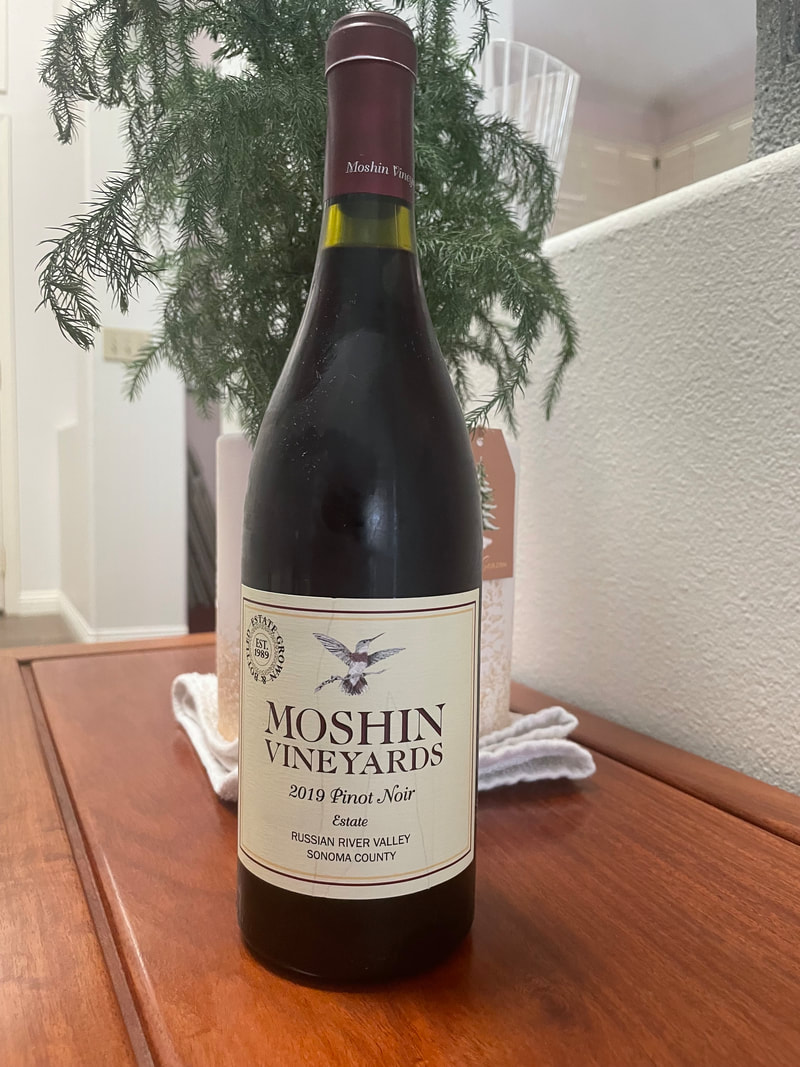
​The winery we visited after Porter Creek was so good that it might be worthy of not just applause but a standing ovation!  Yes, the winery, Moshin Vineyards, is that good.  I would love to claim that my great knowledge of wine and wineries led me to this great discovery, but the fact is I chose it because it was the next winery down the road from Porter Creek.
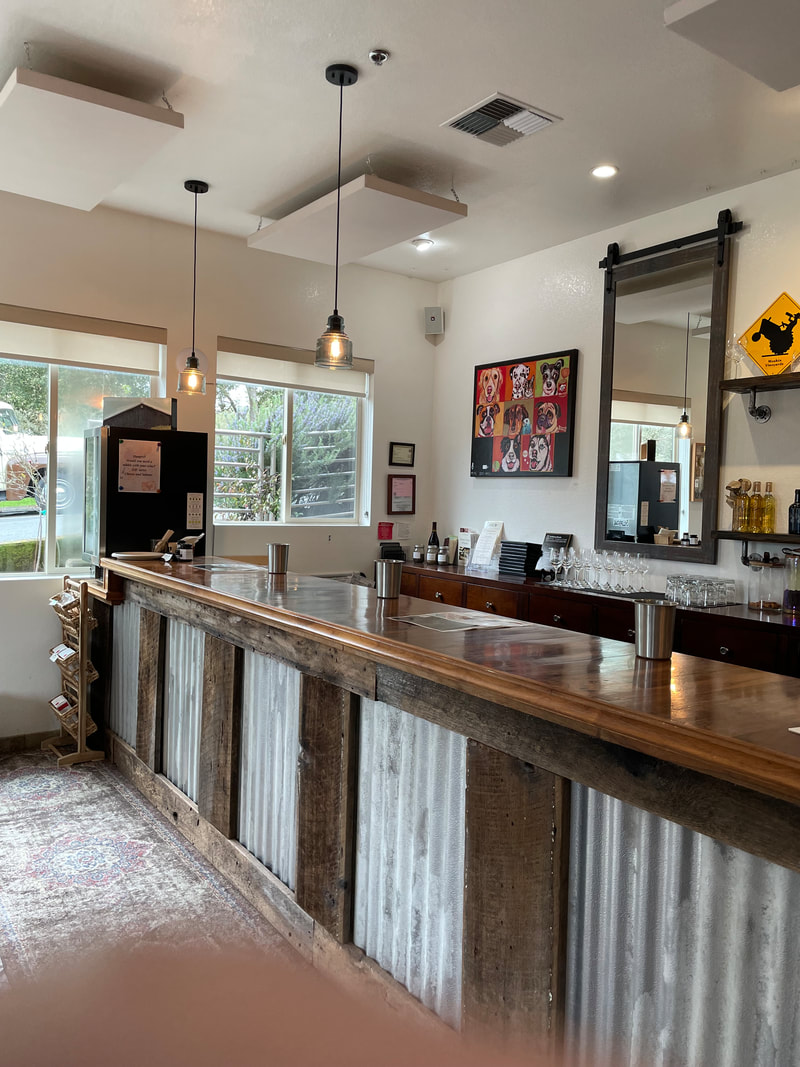
Fortunately, Moshin held the barrel tasting down in the barrel room, out of the cold and rain.  For each wine we tasted a sample from the barrel and one of a previous vintage available for purchase.  After tasting from the barrels, it was lunch time (yes, we drank a lot of wine before lunch), so we asked if they had a place where we could bring in food.  Well, they were very simply incredible great people.  They moved tables around for us in their small tasting room (see picture below), and then spent time with us talking wine and their winery.
Picture
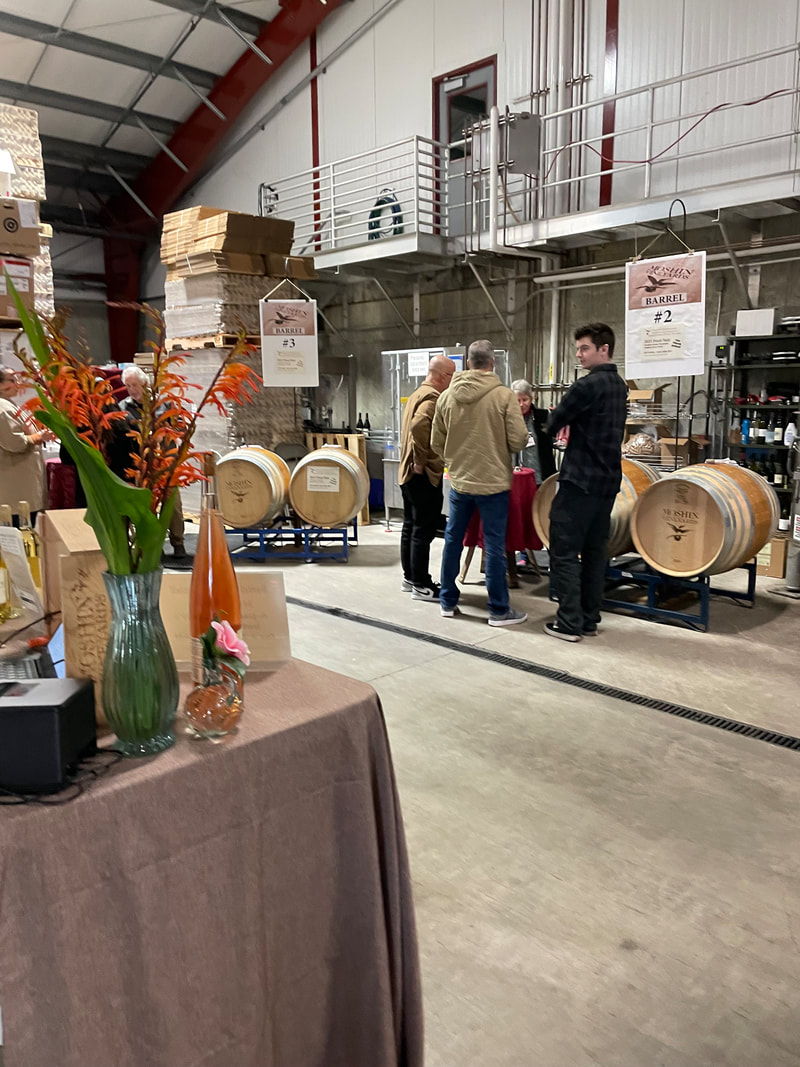
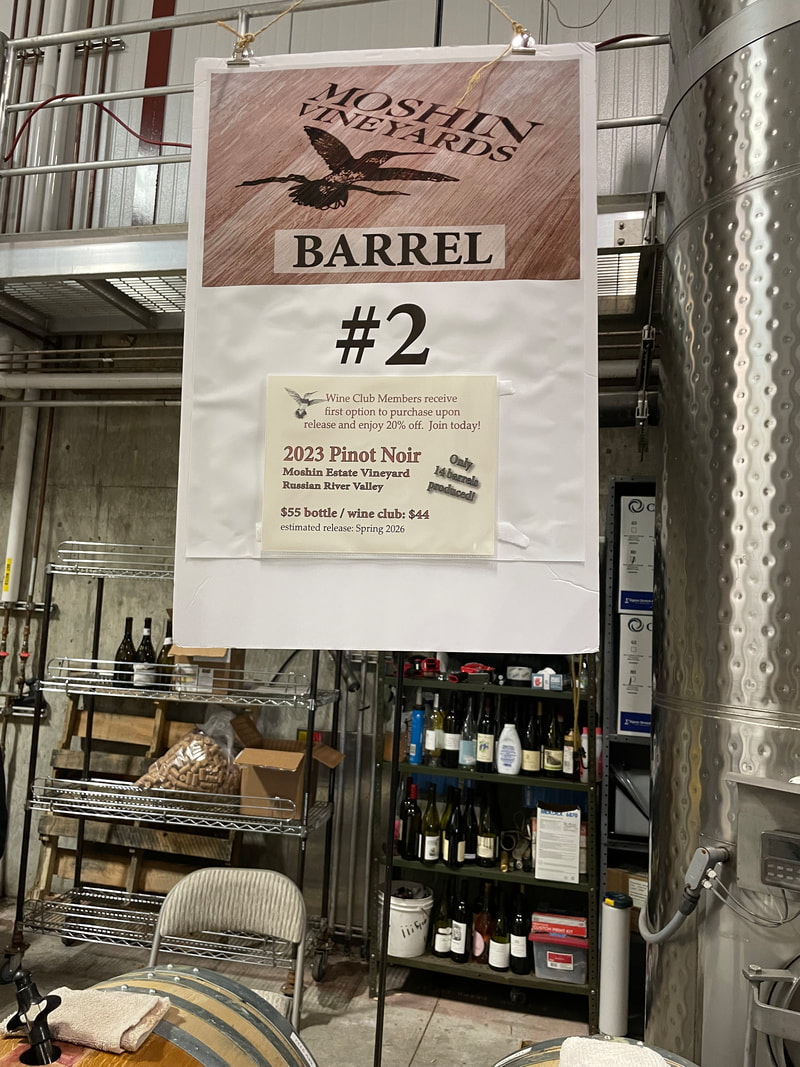
​The wines they offered were as expected:  Pinot Noir and Chardonnay.  Both are excellent, the Pinot Noir so much so that we purchased a case.  Below is a picture of their barrel tasting set-up, followed by a somewhat technical explanation on how they make such a good Pinot Noir.  I will understand if you don’t read this part, but, well, I did spend some time on it….
Picture
Picture
​Gas often gets trapped in liquids, and if you shake up the liquid the gas comes out of solution.  You know, like when you shake up a bottle of soda or beer – what am I talking about here, you drink wine not soda or beer!  Sorry about that.  If you shake up a bottle of Champagne or Cava the gas comes out of solution and the pressure builds up, so much so that the cork comes out as soon as you take off the metal and shoots across the room along with a lot of the wine (oh, the horror!).  Worse than the time you loosened the cork and had it pop off and zoom up and hit a light fixture in the ceiling.  I mean, everyone has had that happen, haven’t they?  Can’t be just me….
Getting back to the point here, normally the wine is pumped from one container to another – say from a settling tank to an aging barrel, or from aging barrels into a central container to mix the barrels before bottling, and, of course, from a tank into the bottles.  This mechanical movement of the wine does the same thing as shaking up the Champagne bottle – it releases trapped gas.  What is this gas, you ask, other than air?  Well, that depends on the fermentation process, varying with such issues as fermentation temperature, chemicals on the skin of the grapes, and the yeast used to ferment the grapes.  Some are not good to have in the wine, especially hydrogen sulfide.  In general, losing these gases is good.  But not all winemakers believe losing these gasses is a good idea, at least not for all grape varieties.  Rick Moshin is in this latter category.  And he put his money where his mouth is by building a winery designed to greatly reduce the loss of these gasses.
How?  Well, he built the Moshin winery on levels (see pictures above) so the wine can be moved from container to container entirely, and slowly, by gravity feed (or by pump, but we will get to that later).  In this way, the wine is not stirred up and the gasses remain in solution.  Of course, the resultant wines have to be decanted and/or aerated to remove the bad gasses after opening the bottles, but he feels this is a small price to pay for the improved taste of the wines.  At least for Pinot Noir.
As noted above, he can also transfer liquids by pump, releasing the trapped gas, and for good reason – trapping the gas is a very bad idea for most other grape varieties, such as Cabernet Sauvignon.  But, when you own a vineyard in the Russian River are of Sonoma, and grow really great Pinot Noir grapes, it makes great sense to put your efforts into the Pinot Noir.
Rick also pointed out a few other niceties in his wine making methodology.  For instance, he does not crush the grapes – he gets them to crush themselves!  I like to think that he forces them into some sort of cage matches, but the reality is much more mundane.  After destemming, he loads them into the fermentation tank and the weight of the grapes on top crushes the grapes on the bottom, setting off a fermentation sequence that results in all the grapes bursting and adding to the final product.
The cage match concept might better describe how he handles yeast.  Natural yeast varieties often settle on the skin of the grapes.  Many wineries kill off this natural yeast and add commercial yeast, giving them control of the flavors the yeast adds to the wine.  Rick goes entirely with the natural yeast.  He believes it adds complexity to the wine.
Based on the wines we tasted – and bought – I believe strongly that Moshin has hit upon a great way to make fine wine from Pinot Noir grapes.  A great hit for our first day of barrel tasting!
0 Comments

Porter Creek Vineyards

4/2/2024

0 Comments

 
Picture
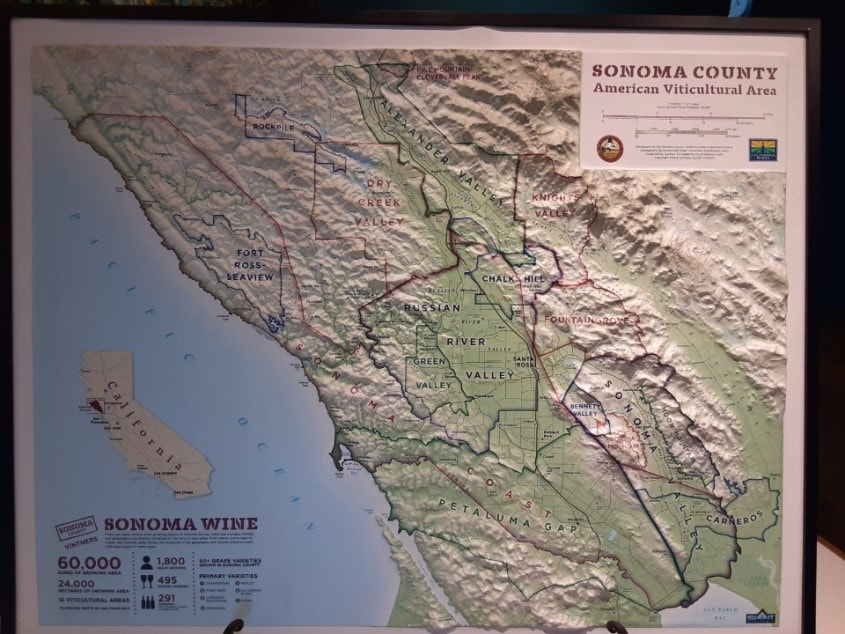
​The picture above is a topological map of the Sonoma wine growing regions.  For our first day of barrel tasting we headed into the Russian River region, somewhat in the southwestern part of the county.  To the northwest is the Dry Creek region, and to the north the Alexander Valley region.  The Pacific coastline runs somewhat northwest to southeast, putting the Russian River area closer to the very cold ocean than the other two.  The hills along the coast are also lower in the Russian River region.  These two facts lead to a cooler climate like the Burgundy region of France.  Now in Burgundy you can only grow two grapes – Pinot Noir and Chardonnay.  All red Burgundy wines are made from Pinot Noir grapes and only Pinot Noir grapes, and all white Burgundy wines are made from Chardonnay grapes and only Chardonnay grapes.  Ergo, it stands to reason that wineries in the Russian River region of Sonoma would do well growing Pinot Noir and Chardonnay grapes.  Porter Creek Vineyards, our first stop in the Russian River region, got the message in spades….
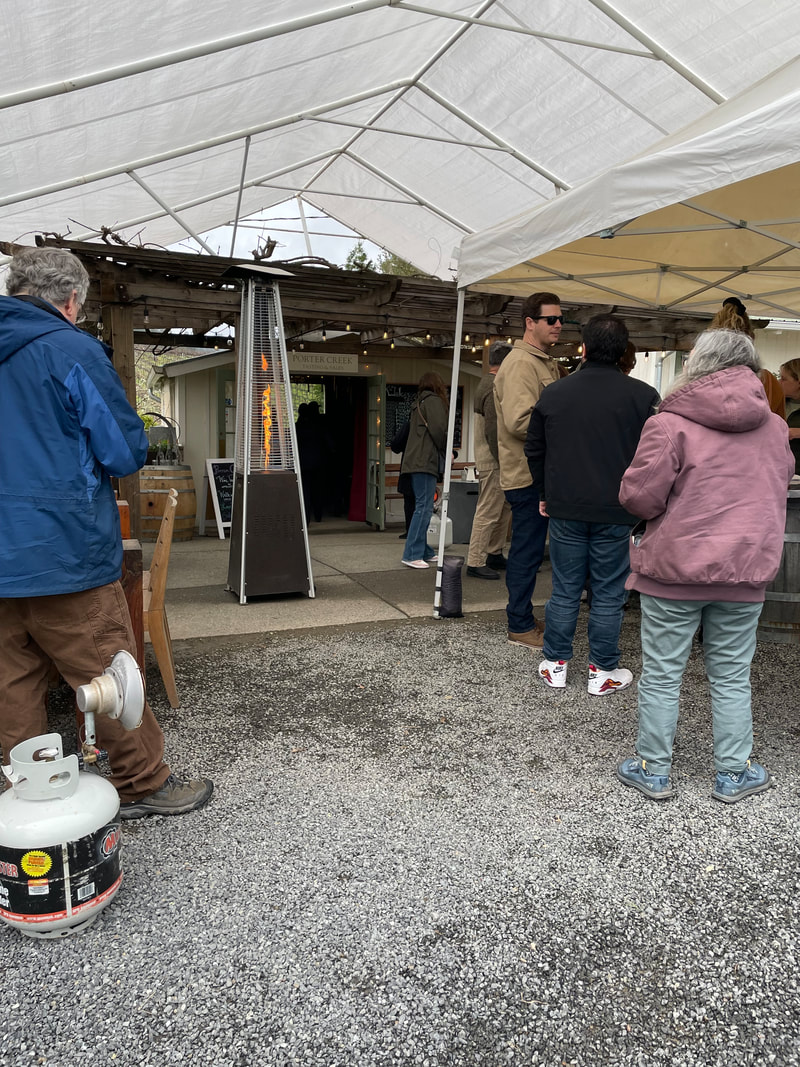
When we first arrived at Porter Creek, the weather was not so bad, and the small tent where they held the tasting mostly empty.  It turns out we were the vanguard, as within twenty minutes or so the tent was crowded, as was the small tasting room.  The weather shortly thereafter turned very nasty – cold and rainy.  Being a complete wimp when it comes to cold, damp weather, I only came out of there with two pictures.  But I did manage to taste most of their wines.
Picture
​As one might hope, they produce some very nice Pinot Noir from their estate grown grapes.  Porter Creek places a great deal of effort into the growing of the grapes without any synthetic chemicals, and extends this requirement to the growers that provide one-third of the grapes it uses.  This extra effort to protect the environment also seems to lead to better wine.
Picture
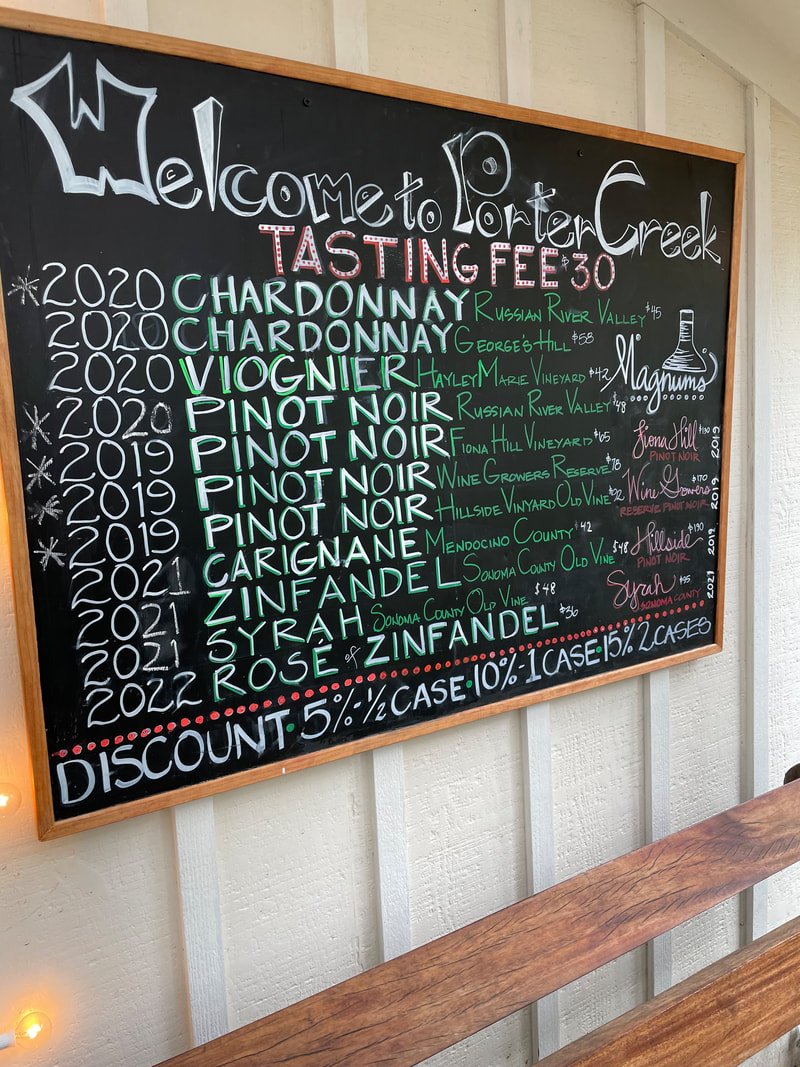
​Now, as one is in a nice region for growing two of the most popular grapes in the world, it came as a bit of a surprise that they offered wines made from other grapes – Zinfandel, Viognier, Syrah and Carignane, bringing in grapes from other Sonoma vineyards as well as vineyards in Mendocino County.
I should add that I learned two things about Carignane in preparing this blog.  First, while the grape is grown in Bordeaux to blend with Cabernet Sauvignon and/or Merlot, its origin is Spain.  Second, it can be spelled with or without the “e”….
0 Comments

    Jim Treglio

    retired physicist and wine lover

    Archives

    December 2025
    November 2025
    October 2025
    September 2025
    August 2025
    July 2025
    June 2025
    May 2025
    April 2025
    March 2025
    February 2025
    January 2025
    December 2024
    November 2024
    October 2024
    September 2024
    July 2024
    June 2024
    May 2024
    April 2024
    March 2024
    February 2024
    January 2024
    December 2023
    November 2023
    September 2023
    August 2023
    July 2023
    May 2023
    April 2023
    March 2023
    February 2023
    January 2023
    December 2022
    November 2022
    September 2022
    July 2022
    May 2022
    April 2022
    March 2022
    February 2022
    January 2022
    December 2021
    November 2021
    October 2021
    September 2021
    August 2021
    July 2021
    May 2021
    April 2021
    March 2021
    February 2021
    January 2021
    December 2020
    November 2020
    October 2020
    September 2020
    August 2020
    July 2020
    June 2020
    May 2020
    April 2020
    March 2020
    February 2020
    January 2020
    December 2019
    November 2019
    October 2019
    September 2019
    August 2019
    July 2019
    June 2019
    May 2019
    April 2019
    March 2019
    February 2019
    January 2019
    December 2018
    November 2018
    October 2018
    September 2018
    August 2018
    July 2018
    June 2018
    May 2018
    April 2018
    March 2018
    February 2018
    January 2018
    December 2017

    Categories

    All

    RSS Feed

Proudly powered by Weebly